TL;DR
Poor listings with unclear titles and descriptions can lower sales. Make sure to focus on clear benefits and use relevant keywords.
Poor product images and A+ content can hurt your chances of selling. Use high-quality photos and create engaging content.
Make sure your pricing is competitive. Check what your competitors are charging and adjust to stay in the Buy Box.
A few reviews and low ratings can stop customers from buying. Ask for reviews and engage with customers to build trust.
Poor PPC campaigns waste money. Adjust your ads to target the right keywords and track how they perform.
Missing out on seasonal trends and external traffic can lower sales. Plan for peak shopping times and use Google Ads and social media to bring in more customers.
Why are my Amazon sales down? Are you wondering the same?
Many sellers face challenges that impact their Amazon product ranking and overall visibility. Whether it's poor product listings, inventory mismanagement, or relying solely on Amazon search for traffic, these issues can seriously hurt your sales.
Understanding the common mistakes that hinder your success is the first step to turning things around. This article explores the most frequent reasons why your sales might be dropping and provides clear, actionable fixes.
From optimizing your listings to driving external traffic and adjusting your pricing strategy, these tips will help you regain control and boost your sales. It's time to fix the problems and get your Amazon business back on track.
10 mistakes that hurt your Amazon sales and how to solve them
1. Poor product listing copy
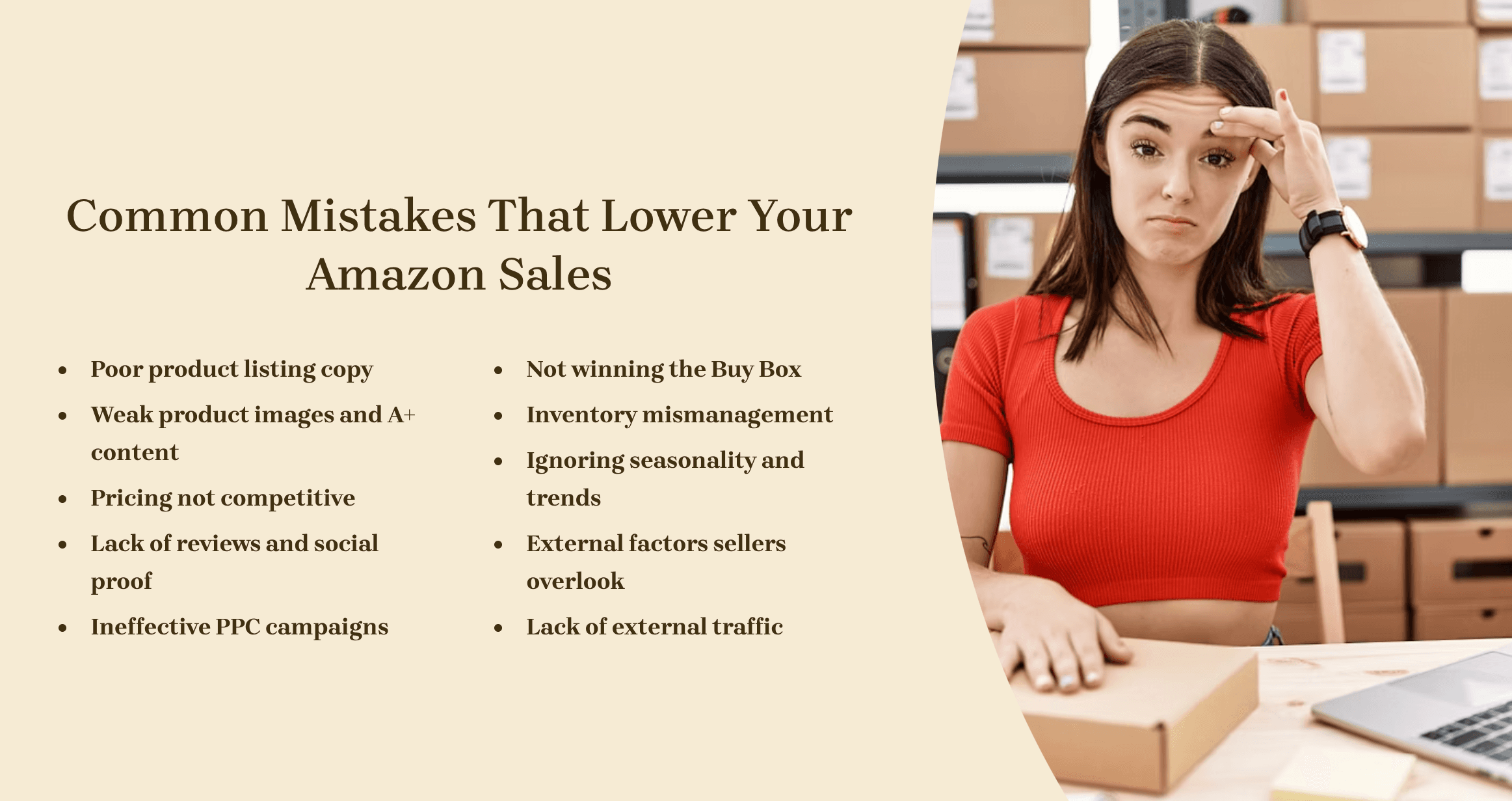
Weak titles, unclear bullets, missing descriptions, and a lack of backend keywords lead to poor Amazon listing optimisation. When your product listing is vague or doesn’t address customer needs clearly, it can hurt your conversions. Potential buyers may not understand the value of your product, and search engines might not be able to find it.
How to fix:
Start with a keyword-rich title that includes your product’s main benefits. For example, in your product title, instead of "Blender," use "Powerful Blender for Smoothies – Quiet, Fast, and Easy to Clean."
Next, write clear, benefit-driven bullets that explain how the product will solve customer problems or improve their life. Use concise language that’s easy to read. Don’t just list features, show the real-world value.
For the product description, be specific and highlight key features, advantages, and unique selling points. Don’t forget the backend keywords; these help Amazon’s search engine better match your product with customer searches.
Fill out all relevant fields with accurate and specific data to improve your chances of being found. By optimizing your copy for both customers and Amazon’s search algorithm, you can improve your visibility and sales.
2. Weak product images and A+ content
Many Amazon listings suffer from poor product images and unengaging A+ content. This includes using stock photos that don’t accurately reflect your product, cluttered designs that confuse customers, or a lack of lifestyle use cases that show your product in real-world scenarios. Shoppers can’t connect with these listings, and that can hurt your sales.
How to fix:
Invest in professional photos that clearly show your product from multiple angles, highlighting key features and its actual use. Use lifestyle images to show the product in action, helping customers imagine how it fits into their daily life.

Example of the product image showing the real-life use
Next, enhance your A+ content. Make it more engaging by using infographic images to visually explain product benefits and use cases. Break down information into easy-to-read sections with clean designs. By focusing on high-quality images and engaging, informative A+ content, you’ll create a better shopping experience, leading to higher conversions and improved sales.

Amazon A+ content
3. Pricing is not competitive
If your product is priced too high or too low compared to competitors, it can hurt your sales. Too high, and customers may choose a cheaper option; too low, and they might question the quality.
How to fix:
To fix this, you need to stay on top of your competitors' pricing. Monitor competitor prices regularly to ensure you're within a competitive range. You can use repricing tools to automatically adjust your prices based on changes in the market. These tools will help you stay competitive without constantly checking prices manually.
Additionally, make sure your price is Buy Box eligible. If you’re not in the Buy Box, you’ll miss out on many sales opportunities. Price adjustments, along with factors including shipping speed and customer service, can increase your chances of winning the Buy Box.
By keeping your pricing competitive and strategically adjusting based on market trends, you’ll improve your chances of making more sales on Amazon.
4. Lack of reviews and social proof
One of the biggest reasons for low sales on Amazon is a lack of reviews or poor ratings. Without positive reviews, customers may hesitate to purchase, especially if there is unaddressed negative feedback.
How to fix:
Enroll in Amazon Vine: Vine is a program that lets you get verified reviews from trusted reviewers. It can help you quickly build up a solid review base.
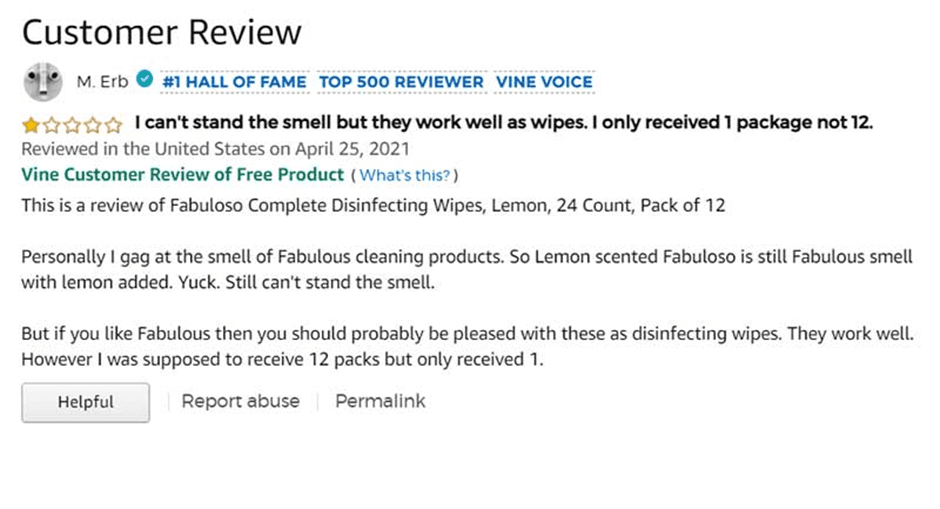
Amazon Vine customer review
Request Reviews: After a purchase, send polite follow-up emails asking customers to leave feedback. Amazon allows you to send automated review requests through the Seller Central dashboard.
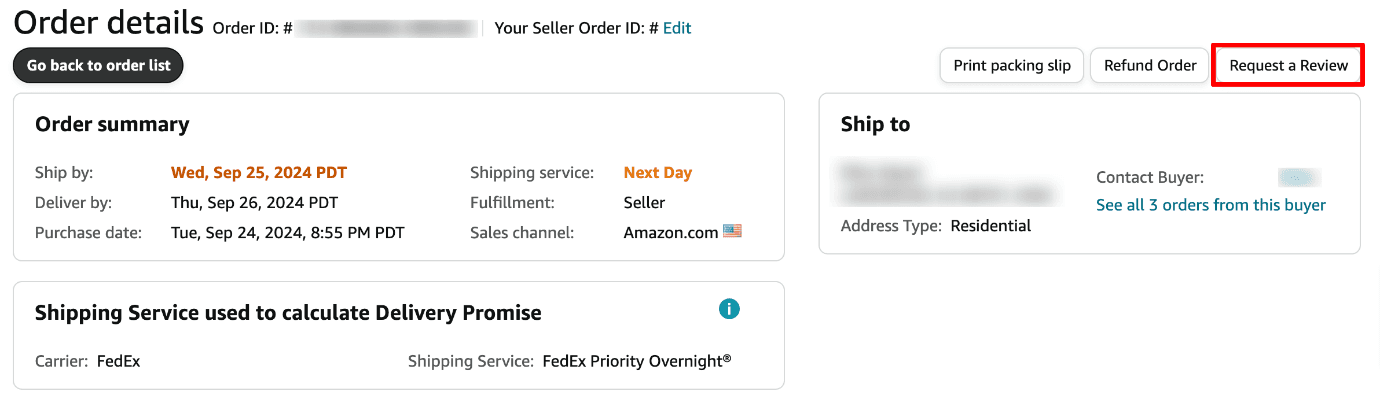
Request a review button in Seller Central
Improve post-purchase experience: Make sure your product and service exceed customer expectations. A great experience encourages positive feedback and repeat customers.
Respond to reviews: Engage with your customers, both positive and negative. Acknowledge their feedback and show you're actively working to improve, which builds trust and can help resolve issues before they affect your reputation.
By building up your reviews and engaging with customers, you’ll gain the social proof that drives higher sales and builds brand credibility.
5. Ineffective PPC campaigns
If your PPC campaigns aren’t delivering, you might be wasting money on irrelevant keywords, not using negative keywords, or having a poor bidding strategy. These issues can lead to high ACoS (Advertising Cost of Sale) or low TACoS (Total Advertising Cost of Sale), meaning you’re not getting a good return on your ad spend.
How to fix:
Restructure campaigns: Break your campaigns into tighter groups based on product type or customer intent. This helps improve targeting and relevance.
Add negative keywords: Make sure you’re excluding irrelevant search terms. This will prevent your ads from showing up for searches that won’t convert.
Test match types: Experiment with different keyword match types (broad, phrase, exact) to find the best-performing ones for your products.
Track ACoS and TACoS: Keep a close eye on these metrics to evaluate performance. Adjust bids, budgets, or targeting to optimize spending and improve profitability.
By optimizing your PPC strategy, you’ll increase ad relevance, reduce wasted spend, and ultimately see a boost in sales.
6. Not winning the Buy Box
One of the most common reasons for low Amazon sales is not winning the Buy Box. If your product isn’t the default option for customers, it’s hard to make sales, even if your listing is top-notch.
Issues:
Poor fulfillment method: If you’re handling fulfillment yourself (FBM), you may struggle to meet Amazon’s standards for fast and reliable shipping.
Late shipments: If your delivery times are longer than expected, customers will pass on your product.
Higher landed price: If your product is priced higher than competitors, even if the difference is small, you may not win the Buy Box.
How to fix:
Use FBA: This ensures faster shipping and meets Amazon’s high standards for reliability.
Keep your metrics strong: Monitor your Order Defect Rate, Late Shipment Rate, and Valid Tracking Rate. Make sure they’re all within Amazon’s recommended range.
Ensure competitive pricing: Use tools such as Helium 10 and Jungle Scout to monitor your competitors’ prices and adjust accordingly to stay competitive.
By fixing these issues, you increase your chances of winning the Buy Box, which can lead to more visibility and ultimately, more sales.
7. Inventory mismanagement
Inventory mismanagement is a major reason for low sales on Amazon. Stockouts lead to lost sales and ranking drops, while having excess stock can result in costly storage fees. Both scenarios can affect your profitability and visibility on the platform.
How to fix:
To prevent stockouts, start by tracking demand trends and understanding seasonal fluctuations. This will help you forecast your inventory needs more accurately. Use tools like Amazon's inventory performance dashboard to monitor sales velocity and adjust your stock levels accordingly.
Another solution is to balance your FBA and 3PL (third-party logistics). Keep fast-moving items with Amazon FBA for quick shipping and use 3PL for slower-moving products to reduce storage costs. Regularly review your stock levels and adjust based on actual sales trends.
By forecasting properly and using the right mix of FBA and 3PL, you can prevent stockouts and avoid unnecessary storage fees, ultimately boosting your sales and keeping your Amazon business running smoothly.
8. Ignoring seasonality and trends
Failing to account for seasonal spikes during Prime Day can result in missed sales opportunities. If you're not prepared for these key events, you might find yourself understocked or missing out on advertising opportunities.
How to fix:
The key to handling seasonality is planning. Start by reviewing sales data from previous years to identify trends for major shopping events like Prime Day, Black Friday, and Cyber Monday. Once you have a sense of these peaks, adjust your inventory levels to ensure you don’t run out of stock during high-demand periods.
Also, plan your ads and promotions well in advance. Set up targeted campaigns for these events and schedule promotions early. Tools like Amazon Advertising can help you prepare and push your products to the top during these crucial sales windows.
By planning your ads, promotions, and inventory around seasonal trends, you'll avoid missed opportunities and maximize your sales during peak times.
9. External factors sellers overlook
Many sellers overlook external factors that can negatively impact their sales, such as product compliance flags, suppressed listings, and poor customer service metrics. These issues can lead to delisted products or reduced visibility, making it harder for customers to find your listings.
Compliance issues, like missing certifications or policy violations, can also cause Amazon to suppress your product ranking on Amazon.
How to fix:
To avoid these problems, perform regular account health checks. Use Amazon’s Account Health dashboard to monitor your performance and stay on top of any policy violations or product compliance issues. If you spot a potential problem, address it right away by reviewing Amazon’s guidelines and making necessary adjustments.
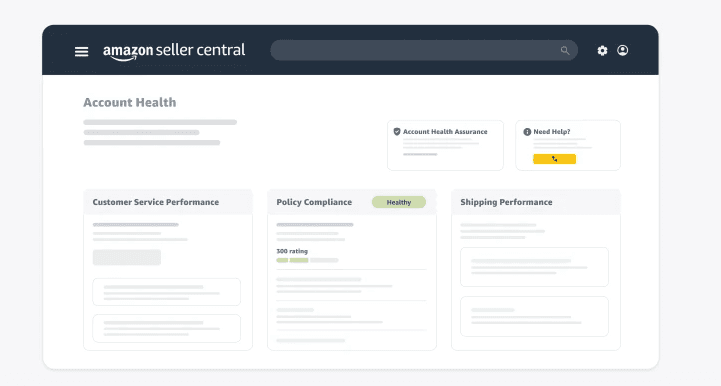
Amazon’s Account Health dashboard
Also, pay attention to your customer service metrics. Aim for fast response times and a high customer satisfaction rate to prevent negative feedback. Keeping up with Amazon policy changes is critical, so regularly review Amazon's updates to ensure you're compliant with any new rules.
By staying proactive and addressing these external factors early, you’ll keep your account in good standing and avoid any disruptions to your sales.
10. Lack of external traffic
Many Amazon sellers rely solely on Amazon search to drive traffic, but this limits visibility. If customers are only finding your products through Amazon’s internal search engine, you’re missing out on a huge pool of potential buyers. Without external traffic, you may not be reaching as many customers as you could.
How to fix:
Start by driving traffic from Google Ads. With targeted campaigns, you can attract customers directly from search engines to your Amazon listings. Similarly, leverage social media platforms like Instagram, Facebook, and TikTok to reach a broader audience and engage with potential buyers.
You can also work with influencers who align with your brand to promote your products and drive additional traffic. Influencers have dedicated followings that trust their recommendations, making them great allies for boosting visibility.
Lastly, ensure your Amazon brand storefront is optimized. A professional, easy-to-navigate storefront can attract more shoppers directly to your products.
Closing remarks
Addressing the common issues that hurt your Amazon sales is the first step toward boosting your performance. From optimizing your listings to managing inventory, using the right pricing strategy, and increasing external traffic, each fix can make a significant difference in your sales.
By staying proactive and refining these areas, you can ensure your Amazon business thrives. SellerQI offers AI-powered root cause analysis, giving you the answers and roadmap to resolve every challenge.
Start optimizing your listings with SellerQI!