
TL;DR
A+ Content goes beyond design and directly influences customer trust and conversion rates.
Listings with basic A+ Content can see up to 8% more conversions, while Premium A+ Content can boost conversions by up to 20%.
Use compelling images, clear product benefits, and emotional triggers to connect with customers.
Focus on benefit-driven copy rather than keyword stuffing for better engagement.
Test, track, and iterate your A+ Content based on data, not assumptions, to improve performance.
Use tools like SellerQI to manage, optimize, and track your Amazon business efficiently.
Want to turn casual browsers into loyal buyers?
Creating A+ Content on Amazon is a strategic way to boost your conversions, build trust, and elevate your brand. For Amazon sellers, A+ Content offers an opportunity to transform your product listing from a simple catalog entry into a powerful sales tool.
By focusing on compelling visuals, clear storytelling, and customer-driven benefits, you can differentiate your product and drive higher sales.
Let’s dive into how effective A+ Content can boost your Amazon marketing efforts and lead to bigger profits. By optimizing your content with the right elements, you’ll not only stand out but also convert more customers.
What does A+ content really do?
Amazon A+ content isn’t just about adding pretty images or fancy layouts. It directly impacts how shoppers see your brand and how Amazon ranks your product. Sellers who use A+ the right way often see higher conversion rates because customers get answers to their doubts right on the listing. Instead of clicking away, they feel more confident to hit “Add to Cart.”
Think of A+ Content as a trust builder. It takes a curious visitor who’s still comparing options and gives them the extra push to become a confident buyer. The detailed visuals, comparison charts, and clear storytelling show that you’re a serious brand, not just another random seller.
According to Amazon, listings with basic A+ Content can see up to an 8% increase in conversions, while Premium A+ Content can boost conversions by as much as 20%.
Another important role A+ Content plays is what we call the “second storefront” effect. Shoppers scroll through A+ Content before making a final decision, just like they would browse your storefront. It’s your chance to reinforce value, highlight USPs, and close the deal without being aggressive.
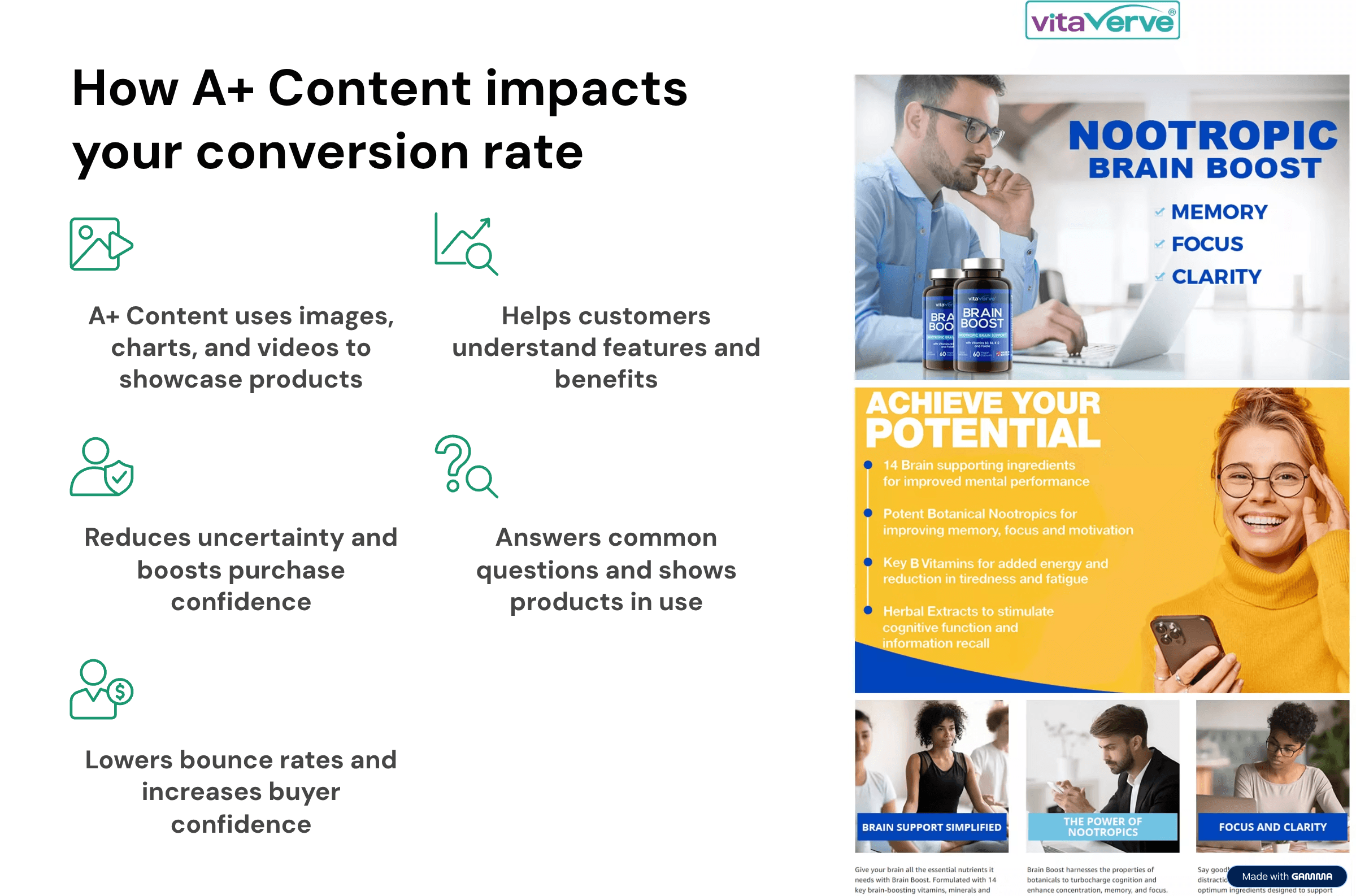
Impact of Amazon A+ content in your conversion rate
The anatomy of Amazon A+ content that converts
#1 Hero image
Goal: The hero image’s primary objective is to capture the customer’s attention immediately and establish the stage for your product. It should encourage shoppers to explore further and get excited about the product.

Example of a hero image in A+ Content
Best practices:
Use a high-quality, clear image that shows your product in use.
Keep it simple, but make sure it highlights the product’s key features.
Ensure the image reflects the brand’s style and resonates with the target audience.
Example: If you're selling a kitchen gadget, a hero image showing the gadget in action, like chopping vegetables or slicing fruit, instantly demonstrates its value and usefulness, engaging potential buyers right away.
#2 Module showing product features
Goal: The product features module highlights what makes your product stand out. It helps customers quickly grasp the key benefits, making them more likely to purchase.

Example of the A+ Content module showing product features
Best practices:
Focus on 3-5 key features that directly impact the customer’s decision.
Use clear, simple language and avoid jargon.
Include visuals like icons or photos to illustrate each feature.
Keep the layout clean and easy to navigate.
Example: For a kitchen blender, highlight features like "Powerful motor for smooth blending," "Durable stainless steel blades," and "Compact design for easy storage." Accompany each with a visual to make it more engaging.
#3 Module about the product
Goal: The goal of this module is to give customers a clear and detailed understanding of what the product is, its key features, and why it stands out.
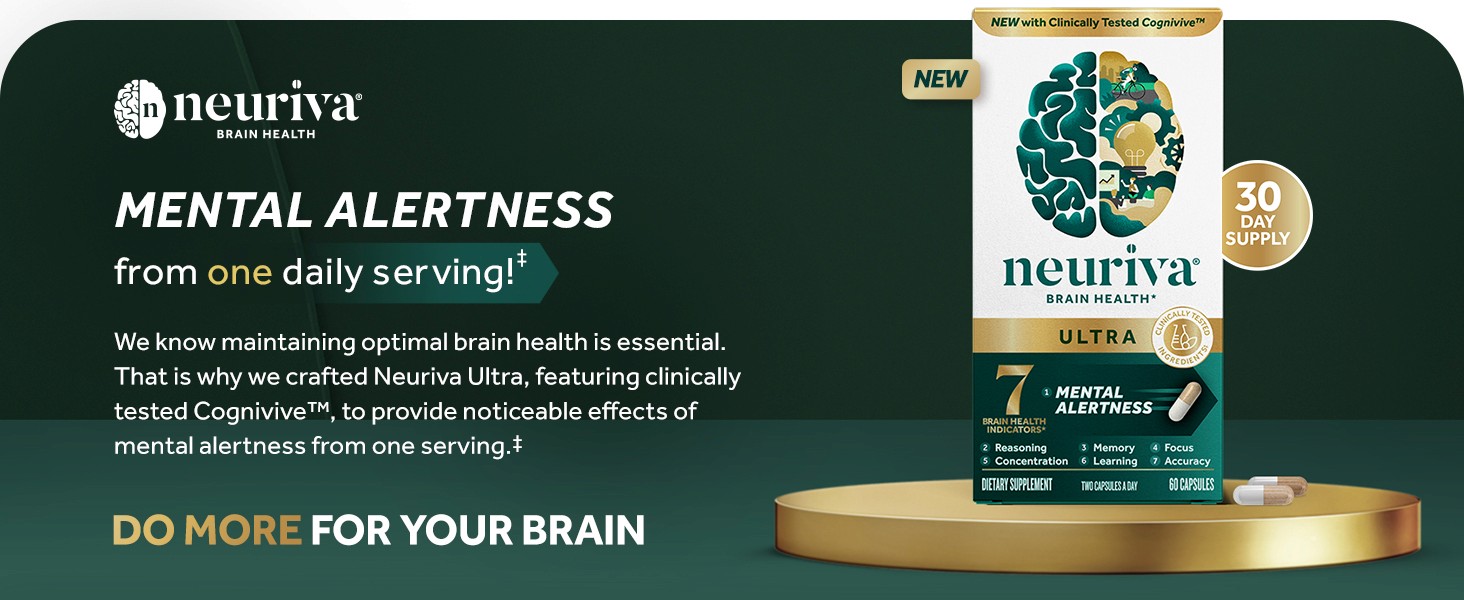
Example of the A+ Content module about the product
Best practices:
Focus on key selling points like material, dimensions, and functionality.
Use clear, concise language to avoid confusion.
Add high-quality images or graphics to complement the text and illustrate features.
Break information into digestible sections, such as bullet points or short paragraphs.
Example: For a kitchen gadget, a product module could include a description of its durable materials, multi-purpose functionality, and easy-to-clean features, with a close-up image showing the product in action.
#4 Module showing multiple uses of the product
Goal: Show customers how versatile your product is, how to use it, and what kind of results they can expect.

Example of the module showing multiple uses of the product
Best practices:
Include images or videos demonstrating the product in different scenarios.
Use before-and-after shots to highlight the product’s effectiveness.
Break down the steps or features that make the product easy to use.
Example: If you're selling a kitchen gadget, show it in action: slicing vegetables, making smoothies, and cleaning up. Add before-and-after images showing how it saves time or improves results. This visual storytelling helps customers understand the product’s full potential and encourages them to make a purchase.
#5 Comparison charts for cross-selling
Goal:
The goal of a comparison chart is to help customers easily compare different products in your range, guiding them to the best option based on their needs.
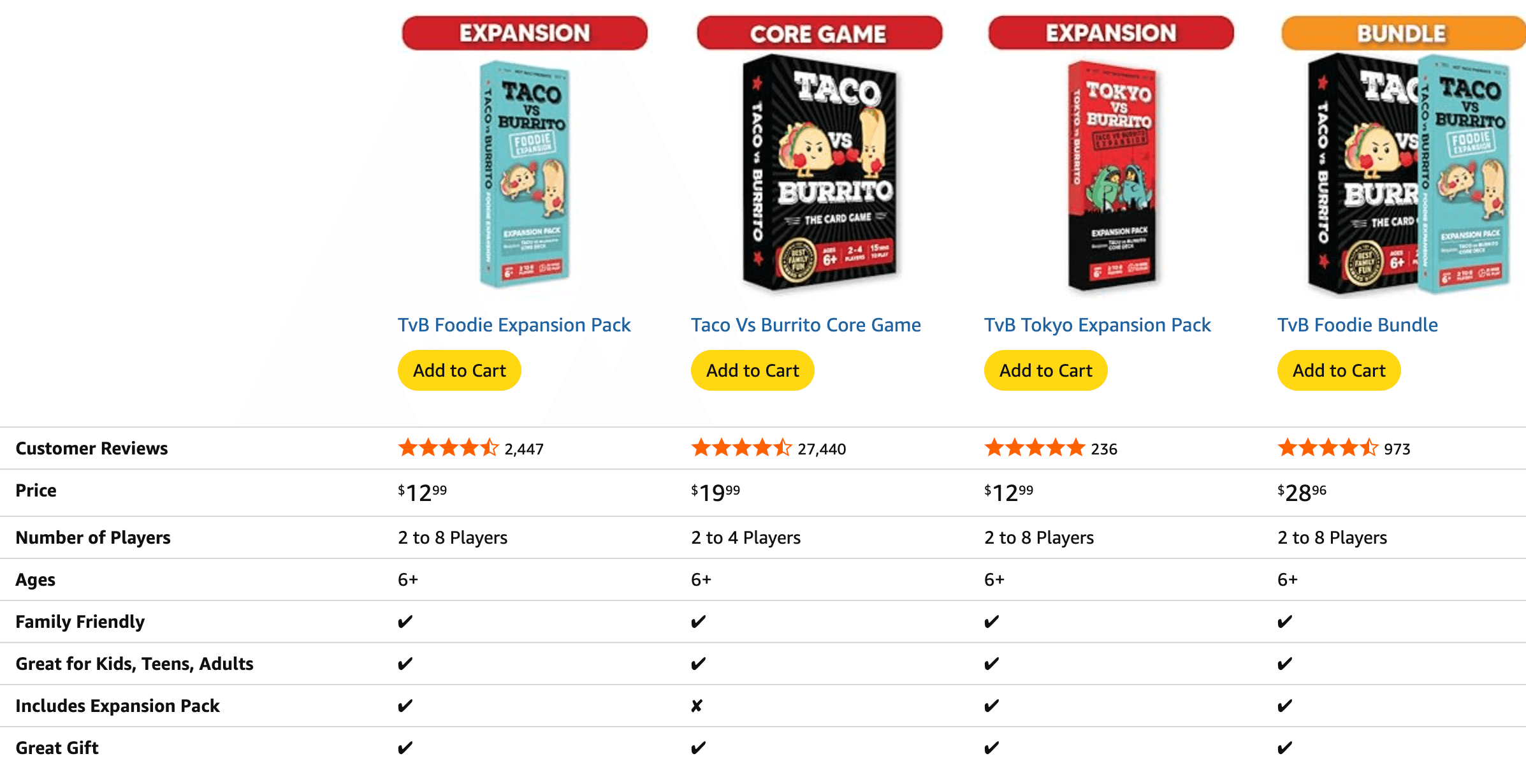
Example of the comparison charts for cross-selling
Best practices:
Keep it simple: Focus on key features and benefits.
Use clear visuals: Make differences easy to spot.
Highlight unique selling points: Show what makes each product special.
Example:
Imagine you sell various kitchen tools and create a comparison chart showing which tools are best for different tasks (e.g. peeling, chopping, etc.). This helps customers choose the perfect tool and might even encourage them to buy more.
The secret to creating A+ Content that sells
1. Write benefit-driven copy
When crafting A+ Content, focus on benefit-driven copy instead of overloading with keywords. The goal is to show how your product can improve the customer’s life. Keyword stuffing can make your content feel forced and less engaging. Keep it natural, clear, and customer-focused to build trust and drive conversions for better Amazon product optimization.
Strategy | Benefit-Driven Copy | Keyword Stuffing |
Focus | Explains the product's value and how it helps the customer. | Repeats keywords to trick the search algorithm. |
How It's Done | Use customer reviews and questions to understand their language, then use it in your copy. | Copy-paste keywords from a tool without thinking about the flow or readability. |
Example | Instead of just "5000 mAh battery," say, "Enjoy non-stop power for your adventures with a 5000 mAh battery." | Writing, "5000 mAh battery, portable power bank, travel charger" in a block of text. |
Result | Builds trust with customers, leading to more sales. | Looks unprofessional and hurts your chances of making sales. |
2. Emotional triggers for customers
When selling on Amazon, it’s not just about listing features; it’s about how your product makes customers feel. Here’s the list:
• Safety: Customers want to feel safe using your product. Highlight certifications, quality materials, and compliance. For example, a “BPA-Free” label on a children’s water bottle builds trust.
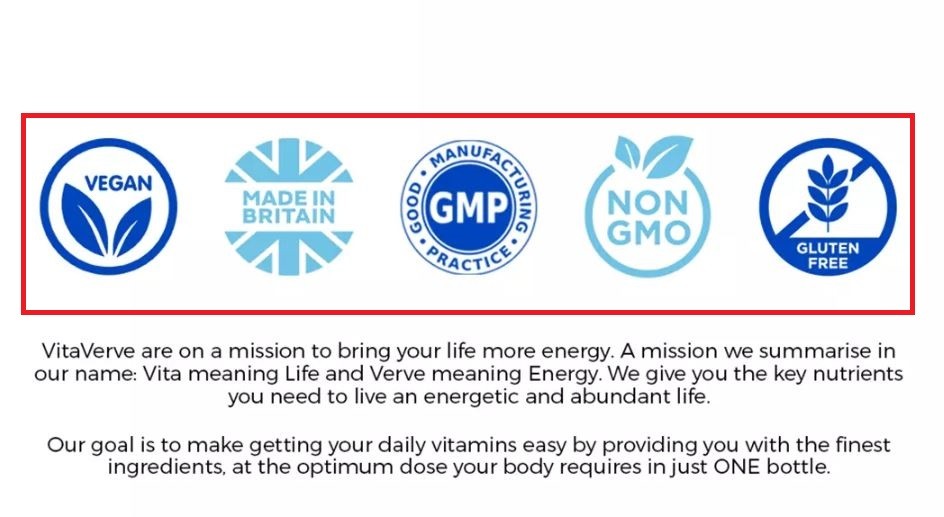
Different safety labels can act as emotional triggers for customers
• Convenience: Everyone values ease. Show how your product saves time and makes life simpler. For instance, a kitchen gadget that speeds up a recipe shows practical convenience.
• Quality: People want items that last. Use close-up shots that showcase premium materials and craftsmanship, like the fine stitching of a leather bag.
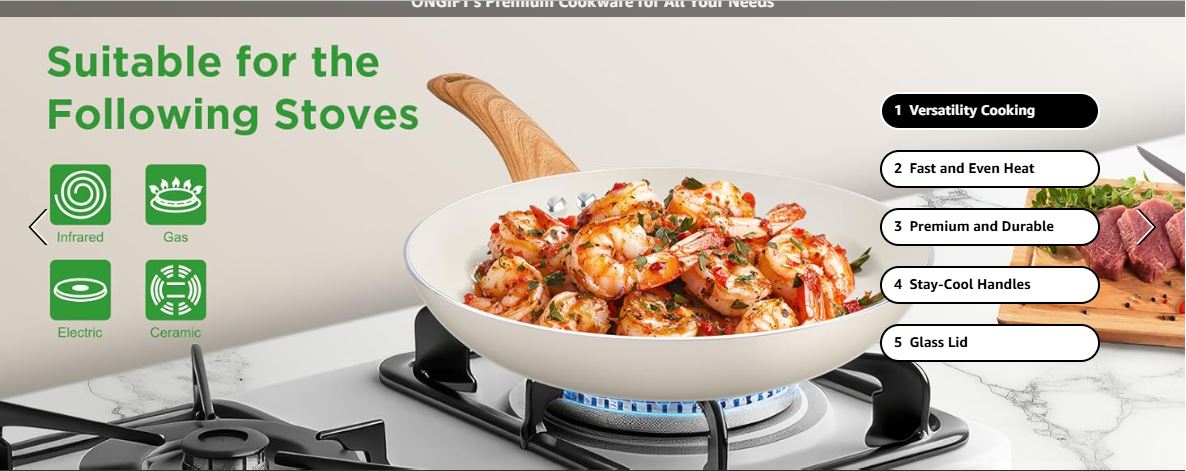
• Value: Frame your product as a smart investment. A comparison chart showing how much money a reusable water bottle saves over disposable ones highlights long-term value.
Aspiration: Use lifestyle imagery to help customers envision their best selves. Show people enjoying the outdoors, not just the product.
By tapping into these emotional triggers, you can create a deeper connection with your audience and increase conversions.
3. Cultural context while making Amazon A+ Content
When creating A+ content, it's important to think about cultural differences. What works in one country might not work in another. Here’s how to adjust your content for different markets:
Region | What Works | Example |
US | Americans like convenience, practicality, and value. | Show how your product saves time or is easy to use. |
DE | Germans focus on quality, durability, and details. | Highlight how your product lasts and the quality materials used. |
AU | Australians value outdoor, active, and eco-friendly products. | Show your product in outdoor settings or mention eco-friendly features. |
UK | The UK prefers quality, design, and elegance. | Emphasize the craftsmanship and stylish design of your product. |
How to design Amazon A+ Content
When it comes to A+ content, design plays a huge role in driving conversions. Here are two key design principles that can help boost your conversions:
1. Using whitespace and visual
Whitespace is the space around your content. It helps avoid a cluttered look and makes it easier for customers to focus on what’s important.
Think of it like a breathing room. By using whitespace strategically, you can guide the shopper's eye to the key elements, like product images, benefits, and call-to-action buttons. This creates a smooth and intuitive flow for the customer.
Visual hierarchy is about arranging content in a way that highlights the most important information first. Use size, color, and placement to lead the customer through your content, making sure the most critical details stand out.
2. Color strategy
Color is more than just a design choice; it’s a powerful tool for influence. Choose colors that align with your brand and product category to create the right emotional response.
For example, blues and greens are great for health and wellness products, as they convey trust and calm. For food or kitchen items, warm tones like red or orange can stimulate appetite and excitement. Your color scheme should complement your brand’s identity while also resonating with the product's purpose.
By using whitespace wisely and picking the right colors, you can create A+ content that’s not only visually appealing but also drives higher conversions.
Storytelling that differentiates your A+ Content
They’re the perfect opportunity to connect with customers on a deeper level and turn your product page into a narrative that builds trust, loyalty, and conversion.
So, how do you craft a brand story that resonates?
People love brands they can relate to. Sharing your brand's vision helps build a personal connection. Start with the "why" of the problem that inspired the creation of your brand. When shoppers understand your motivation, they feel connected to your mission.
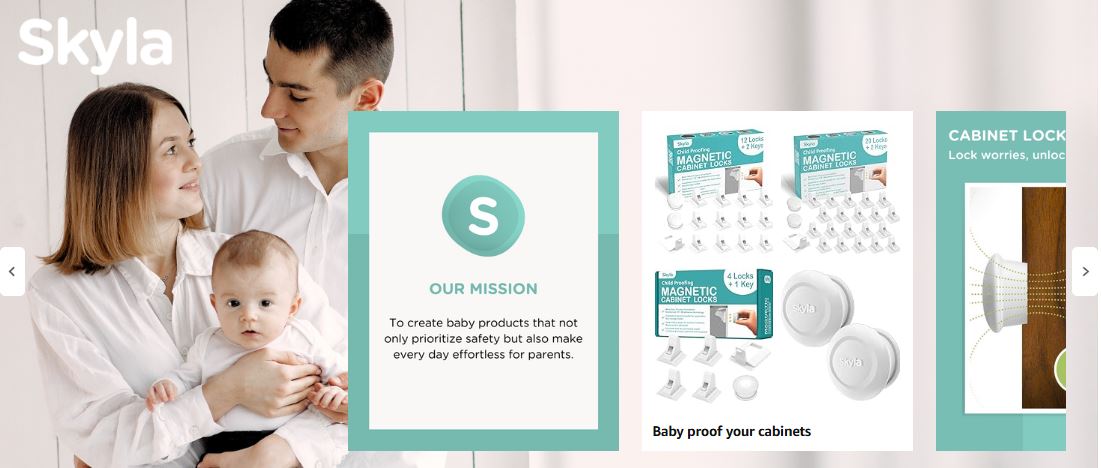
Brands sharing their mission through their brand story
Further, it’s not enough to just say, “Our products are high quality.” Show it!
Transparency is key. Highlight your craftsmanship and ethical sourcing, whether it’s through detailed photos, videos, or descriptions. Show your customers how much care goes into every step of your production process.
This creates trust and assures customers that their purchase supports quality and integrity. Instead of just selling a product, sell the transformation it provides. People don’t buy a coffee machine; they buy the joy of their morning ritual, the energy boost, and the comfort of their favorite cup.
Use A+ Content modules to showcase the experience your product delivers.
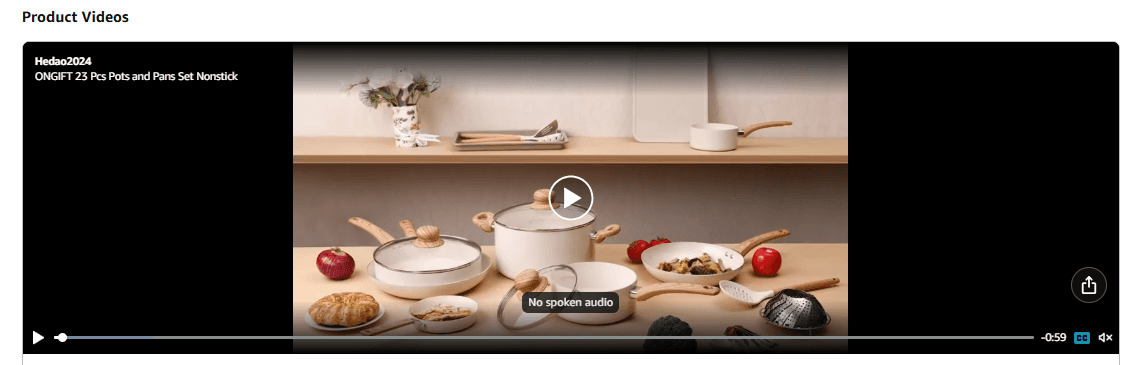
Product video showcase
Lifestyle images, videos, and testimonials are great ways to show real customers benefiting from your product. This makes the story come to life, helping potential buyers imagine their own transformation.
By telling a compelling and relatable story, your brand won’t just be another listing on Amazon. It’ll be a brand that connects emotionally with shoppers, turning casual browsers into loyal fans.
How to optimize your A+ Content
Optimizing your A+ Content can significantly boost conversions, but the key is to base your changes on data, not just assumptions. Here's how you can do it effectively:
1. A/B testing
A/B testing is one of the most powerful tools to see what resonates best with your audience. With Amazon Manage Your Experiments, you can create different versions of your A+ Content and test them against each other. Whether it's images, text, or layout, you can measure what works best.
2. Track conversion parameters
Keep an eye on metrics like Unit Session Percentage, which shows how many visitors to your product page actually made a purchase. If a change in your A+ Content results in a higher conversion rate, you know you're on the right track.
3. Iterate based on data
Once you have the data, use it!
Instead of guessing what might work, look at the numbers. If one version of your A+ Content gets more clicks or sales, iterate on that. Continuous testing and adjusting based on actual performance will always be more effective than making changes based on assumptions.
By using A/B testing, tracking conversion lifts, and making data-driven adjustments, you can continuously improve your A+ Content and see higher sales.
Do’s and Don’ts for your Amazon A+ Content
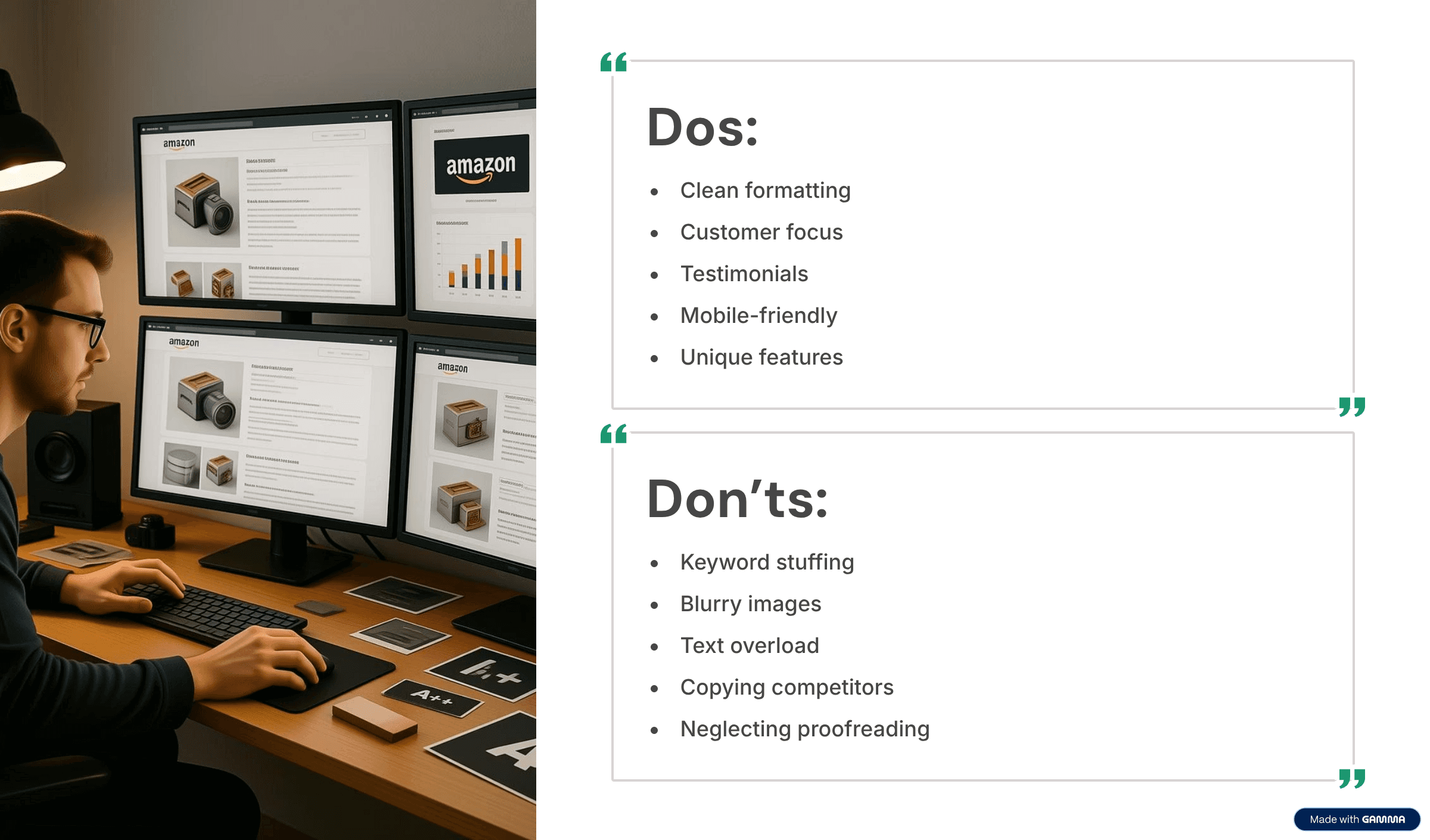
Final insights
Creating Amazon A+ Content that converts is all about connecting with your customers, showcasing your product’s value, and building trust. By focusing on high-quality visuals, clear benefits, and emotional triggers, you can turn casual visitors into confident buyers.
Don’t forget to test, track, and iterate to keep improving your content’s performance. Need help optimizing your Amazon business?
With SellerQIyou can manage, optimize, and grow your business all in one platform. Track your conversions, A/B test content, and get actionable insights to boost your sales and streamline your Amazon marketing.
Start improving today!