TL;DR
Amazon’s Rufus focuses on customer intent and context, not just keywords, making it more customer-centric.
To get recommended by Rufus, create content that highlights benefits, addresses customer needs, and provides value.
Focus on important data like customer feedback, product features, and high-quality visuals to improve your chances of recommendations.
Tailor your listings to specific customer personas and provide clear, relevant product details.
Early conversions, co-purchases, and authentic customer reviews help build relevance and increase your product’s visibility.
Avoid keyword stuffing, generic descriptions, weak visuals, and missing social proof to prevent being overlooked by potential clients like Rufus.
Amazon’s Rufus is changing the way products get discovered and recommended. Unlike traditional search, it focuses on customer intent and context, not just keywords. For Amazon sellers, this means your product’s visibility depends on how well you align your content with what customers are truly looking for.
Want to improve your organic ranking on Amazon and get your product recommended by Rufus?
It’s not about keyword stuffing, it’s about creating relevant, customer-focused content that speaks directly to their needs. This blog gives you the key strategies to optimize your listings, build trust, and boost your chances of being recommended by Rufus.
What is Rufus?
Rufus is Amazon’s new conversational AI and recommendation engine. It helps shoppers find the right products faster by understanding their needs through context and intent.
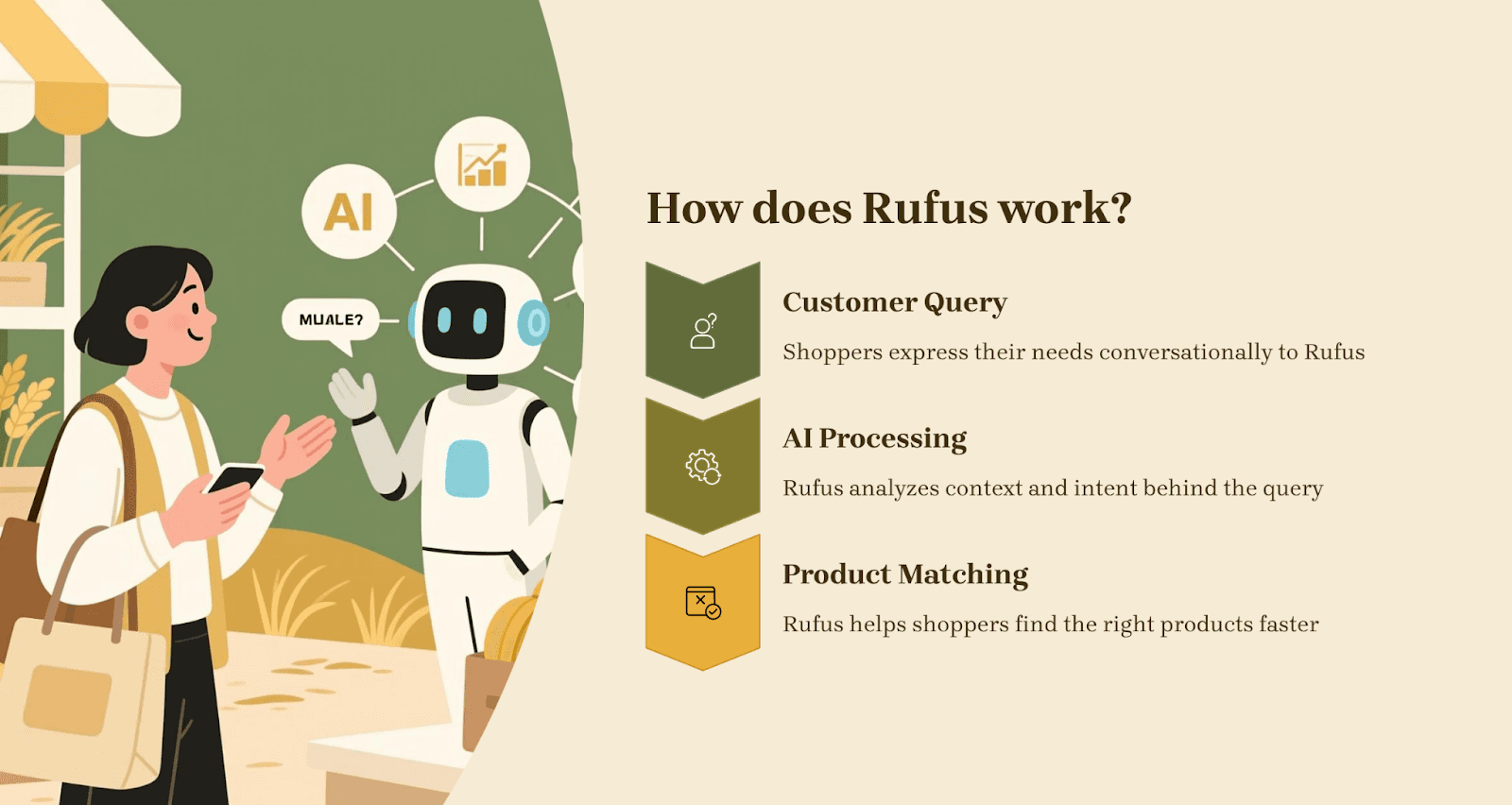
How does Rufus work?
Unlike traditional search, which is based mainly on keywords, Rufus is driven by the customer’s specific intent and context. It looks at what the shopper is trying to achieve, then recommends products that best match their needs. This makes it more customer-centric and personalized.
Why does it matter now?
Amazon is pushing Rufus aggressively in 2024 and beyond. As it becomes a bigger part of the shopping experience, getting your product recommended by Rufus could significantly boost your visibility and sales. By focusing on providing clear value and context in your listings, you can increase the chances of being recommended.
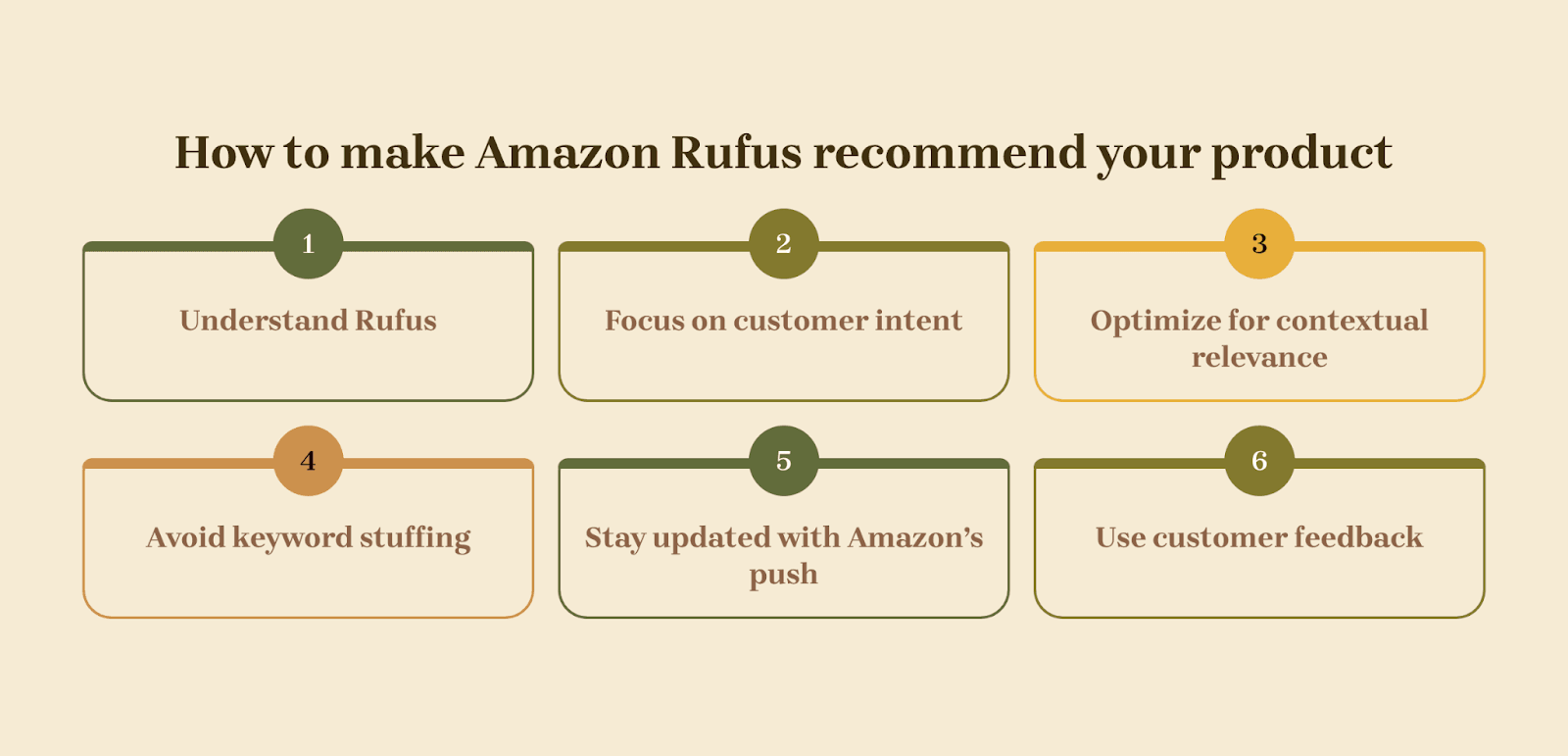
6 reasons why Rufus will recommend your product
Now, let’s look at some simple strategies to help your product stand out so Amazon Rufus is more likely to recommend it. These small but smart steps can make a big difference in getting your product noticed and recommended for your Amazon ranking strategy.
#1: Create listings that highlight benefits, not just keywords
Amazon’s Rufus is changing the game when it comes to product recommendations. It’s no longer about stuffing keywords into your listings and hoping for the best. Rufus focuses on contextual relevance, attributes, and intent-matching. It wants to know what problem your product solves and how it fits the customer's needs.
What does this mean for you?
Instead of just repeating keywords, your listings need to explain the real value your product provides. For example, instead of saying "best blender for smoothies" repeatedly, explain how your blender can save time by creating smoother, tastier smoothies faster. This matches the customer’s intent of wanting an efficient, high-quality product.
Why it matters:
Keywords aren’t dead, but they’re no longer enough. Rufus looks for context that matches a customer’s needs, rather than just relying on a list of keywords. The more your listing aligns with what the customer actually wants, the better your chances are of being recommended by Rufus. By shifting from keyword-heavy copy to benefit-driven content, you’ll not only appeal to Rufus but also create a more engaging, customer-centric listing that drives conversions.
#2: Focus on the data that matters most to Rufus
To get your product recommended by Amazon’s Rufus, you need to understand what data it looks at to make decisions. Rufus isn’t just pulling information from keywords in your listing; it’s considering multiple data sources to ensure your product is relevant to the customer. Here's what matters:
Rufus looks at customer feedback for authentic use cases, benefits, and even complaints. Positive reviews and helpful Q&A can give Rufus insight into how your product performs in real-world scenarios. Make sure your product description aligns with customer experiences and addresses common pain points.
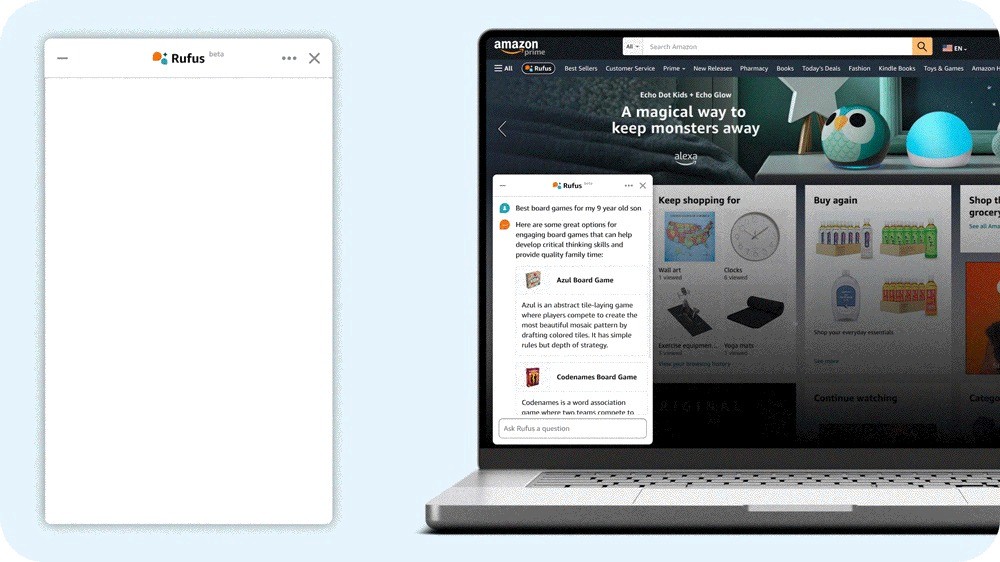
Example of Rufus answering customer questions
Source: Amazon
Amazon has expanded the backend keyword field to 2,500 characters. This means you can add more details about your product’s features, specifications, and use cases. Fill out this space with relevant attributes that describe your product’s benefits and match customer intent.
Rufus also scans your visuals. It looks at the images and videos you upload to understand product type and context. High-quality, informative visuals showing the product in use can significantly boost your listing’s relevance.
Rufus takes into account external signals like Reddit, forums, and social media. These platforms shape customer personas and use cases, helping Rufus refine recommendations. Keep an eye on what’s being said outside Amazon and use that insight to improve your product’s appeal.
By focusing on these key data sources, you’ll increase your chances of being recommended by Rufus.
#3: Connect with the right customers
When it comes to getting your product recommended by Amazon’s Rufus, it’s important to speak directly to the customer persona you’re trying to reach. “Talking to everyone” isn’t effective because Rufus won’t know who your product is really meant for. To stand out, you need to be clear about who your top persona is.
First, think about your ideal customer. What’s their age, lifestyle, and use case?
For example, if you’re selling supplements, your customer might be a fitness-focused millennial looking to boost their energy or a busy professional wanting to reduce stress and improve focus. These are two very different personas, and your messaging should reflect that.
Once you know who you’re targeting, build your listing to speak directly to that persona. For a fitness-focused millennial, your copy might highlight energy boosts and gym performance. Tailor your bullet points and images to resonate with that persona’s needs and language.
By narrowing your focus to one primary persona, Rufus will recognize your product as highly relevant to that audience, increasing your chances of being recommended. Speak to their pain points, desires, and lifestyle, and watch your conversions grow.
#4: Focus on product features, not just words
With Amazon’s Rufus recommendation engine, it’s no longer just about stuffing your product listing with keywords. The product features, such as size, material, benefits, and certifications, are now the real fuel driving Rufus’s decisions. These details help Rufus understand exactly what your product offers and how it matches customer needs.
This structured data is important because it allows Rufus to match your product to the right customer context and intent. The more detailed your attributes, the better Rufus can recommend your product.
How can you do it?
Review your current product listings and make sure all relevant attributes, including size, material, and benefits, are properly filled out.
Ensure that your flat file contains all the necessary attributes. This helps with accuracy when Rufus scans your listing for relevant data.
For example, if you’re selling a backpack, include your product details about material (waterproof nylon), size (20L capacity), and benefits (lightweight, durable). These details tell Rufus exactly what makes your product special and help it match your listing to the right customers.
By optimizing your attributes, you’ll make it easier for Rufus to recommend your product to the right audience, ultimately boosting your sales.
#5: Use storytelling in your bullets, titles, and images
To make your Amazon listings stand out and convert, contextual storytelling is essential. Everything from your bullets, titles, and visuals should work together to tell a coherent, compelling story. Here’s how to do it:
Bullets:
Instead of listing random features, your bullet points should flow naturally and create a story. Each bullet should build on the previous one, showing the customer how your product solves a problem or enhances their life.
For example, if you’re selling a yoga mat, don’t just list features like “non-slip” or “eco-friendly.” Start with, “Achieve a firm, steady practice with our non-slip yoga mat,” and follow up with, “Made from eco-friendly materials for a sustainable routine.”
Titles:
Striking the right balance between keywords and customer benefits is key. Your title should include important keywords, but it must also highlight how the product benefits the customer.
For instance, instead of just saying “Portable Blender,” try something like “Portable Blender for Smoothies – Lightweight, Quick, and Easy to Use.”
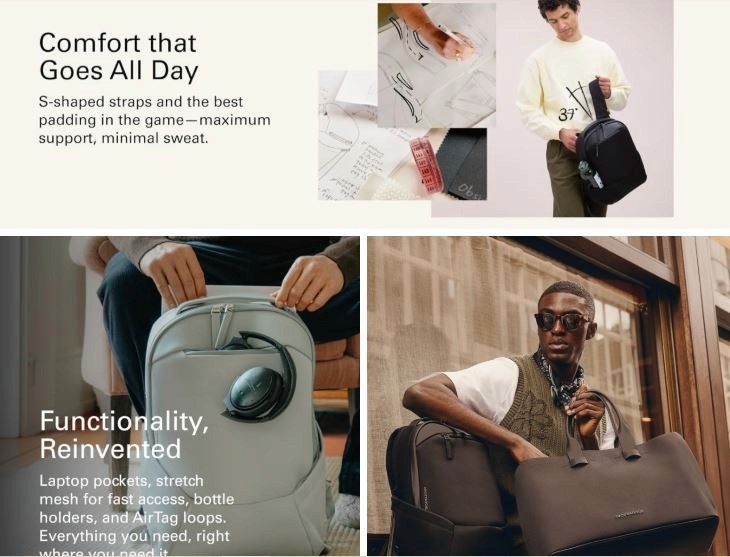
Visuals: Use lifestyle images that resonate with your target persona. Don’t just throw in random stock photos. If your product is for fitness enthusiasts, show people using it in real-life scenarios, like at the gym or on a hike.
How visuals influence buying decisions
Consistency
Ensure that your copy and visuals align with the same story. The words should match the message in your images for a seamless experience that builds trust and drives conversions.
#6: Give Rufus the right information
To get Amazon's Rufus to recommend your product, you need to seed it with the right signals. Rufus uses early data and interactions to determine relevance. Here’s how you can drive those signals:
Start by using PPC ads and offering discounts to attract initial sales. Early conversions are key to building “relevance proof” for Rufus. When Rufus sees customers purchasing your product, it signals that your product is valuable and meets customer needs.
You can also promote bundles or product variations to encourage co-purchase behavior. For example, you could be bundling a kitchen blender with a set of smoothie recipe cards or a storage container set. Customers who purchase a blender may also be interested in these additional items, and Rufus would recognize the combination as a relevant recommendation for future buyers.
Customer reviews play a big role in relevance. Use Amazon Vine to get early reviews, and encourage follow-up emails asking customers to leave reviews that detail how they use the product. Authentic reviews showcasing real-life use cases provide Rufus with valuable context that boosts product visibility.
By driving early conversions, promoting co-purchases, and collecting useful reviews, you’ll signal to Rufus that your product deserves to be recommended.
Mistakes that keep Rufus from recommending your product
When creating your Amazon listings, it's crucial to align your content with user intent. Amazon's Rufus, the AI recommendation engine, is trained on natural language and focuses on understanding deeper meaning, rather than just matching keywords.
Here’s what can hurt your chances of being recommended by Rufus:
1. Keyword stuffing
Overloading your title, bullet points, and description with keywords makes your content sound unnatural. This not only reduces trust from human readers but also makes it less valuable to Rufus. Focus on writing clear, benefit-driven copy that answers the customer’s intent, not just keywords.
2. Generic descriptions
Rufus prioritizes listings that address the "why" behind a customer's search. Simply stating features, like “wireless headphones,” won’t cut it. Instead, explain how they solve a problem, such as “headphones that block background noise on a train.” This helps Rufus understand the context and relevance.
3. Weak visual content
Rufus analyzes images to understand your product. Low-quality images or blurry visuals make it difficult for the AI to interpret the product’s context. Lifestyle images and infographics help Rufus gather data on how your product is used in real-life scenarios, increasing your chances of being recommended.
4. Missing social proof
Rufus also looks at reviews and Q&A to understand sentiment. A lack of reviews or unanswered questions reduces the data Rufus uses to recommend your product. Negative reviews, especially for new products, can lower your chances as well.
To optimize for Rufus, create clear, relevant content that speaks to customer intent, provides strong visuals, and gathers positive feedback.
Ready to boost your Amazon sales?
Getting your product recommended by Amazon Rufus is all about creating content that aligns with customer intent and context. Focus on clear, benefit-driven listings, optimize your backend attributes, and use real-world visuals that speak directly to your target persona.
By avoiding keyword stuffing and engaging with authentic customer feedback, you can improve your chances of being recommended. With SellerQIour all-in-one dashboard gives you actionable insights to optimize your listings, track performance, and refine your strategy.
Start improving your Amazon marketing today and see the difference!