TL;DR
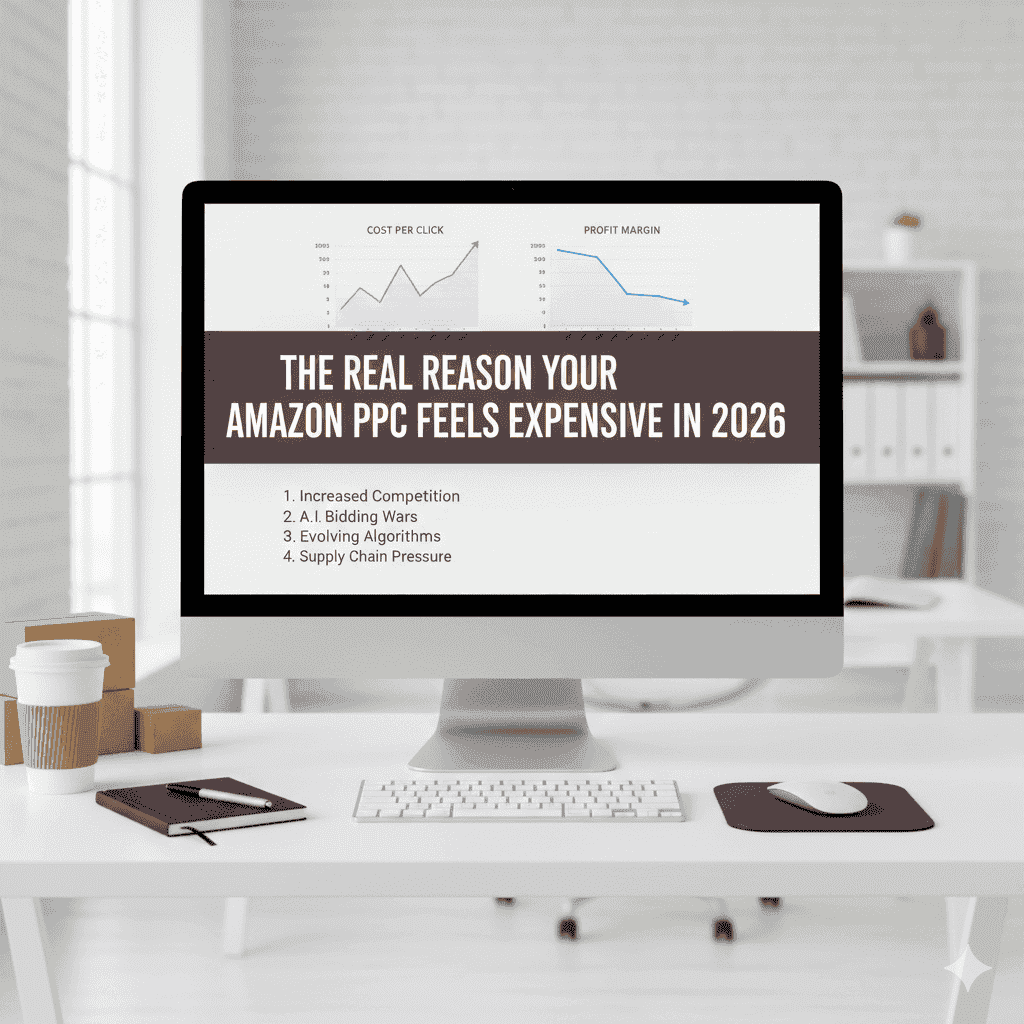
Amazon PPC feels expensive in 2026 because rising CPCs, tighter competition, and weak campaign structures quietly erode profit, even when ads appear to be performing well.
Low ACoS does not always mean healthy growth; rising TACoS often signal over-dependence on ads and declining organic sales.
PPC waste hides in high-ACoS campaigns, non-converting keywords, missing negative keywords, inefficient auto campaigns, and poor budget allocation.
Ads running during stockouts, branded keyword overspending, and campaigns competing with each other further drain margins without obvious warning signs.
Without a clear PPC audit, sellers lose visibility into what truly drives profit, leading to wasted spend and missed growth opportunities.
Regular Amazon PPC audits help cut hidden waste, protect margins, and turn advertising into a predictable, scalable growth channel.
Your Amazon ads are running, sales are coming in, and the dashboard looks busy.
So why does profit still feel… tight?
That gap between “active ads” and real profitability is where most Amazon sellers lose money in 2026. With rising CPCs, tougher competition, and shrinking margins, even small inefficiencies can quietly eat into your growth.
That’s why an Amazon PPC audit is essential. It helps uncover hidden waste, identify keywords and campaigns draining your budget, and reveal whether ads are driving true growth or simply replacing organic sales.
This article breaks down where PPC waste hides, the warning signs sellers often miss, and how to fix leaks before they turn into costly mistakes.
The hidden cost of PPC waste on Amazon
At first glance, Amazon PPC often looks “under control.” Impressions are coming in, clicks are steady, and sales seem to be moving. But this surface-level comfort can be misleading.
With average CPCs now around $1.10 to $1.20, seasonal spikes touching $1.30, and competitive categories like electronics crossing $2.00 per click, even small inefficiencies quietly turn into serious profit leaks. PPC waste today is no longer just a technical issue; it is a margin problem.
Here is what that hidden cost really looks like for you:
Silent profit erosion: Poorly optimized campaigns can quietly drain 30 to 40% of total ad spend. Revenue grows, dashboards look busy, but net profit keeps shrinking month after month.
Negative unit economics: Rising CPCs push ad cost per unit beyond product margins, leaving sellers effectively paying Amazon to advertise, fulfill, and ship their own products.
Organic ranking down: Spending on non-converting keywords sends weak relevance signals to Amazon’s algorithm, causing organic rankings to slide and making recovery expensive.
Branded keyword cannibalization: Overspending on branded terms often replaces organic sales you would have earned anyway, inflating ACoS while hiding true profitability.
Costly stockout recovery: Ads running during stockouts waste budget, and regaining lost rankings later requires higher bids and aggressive promotions.
Increased storage and holding costs: Inefficient PPC slows inventory velocity, triggering long-term storage fees and tightening cash flow.
Misleading performance data: Poor campaign structure distorts insights, making it harder to identify what actually drives profitable growth.
Lost growth opportunities: Every wasted dollar is money not reinvested into high-performing keywords, new launches, or category expansion.
Warning signs your PPC needs an immediate audit
If your ads are running but you're not making more money, you need an Amazon PPC Audit now. Below are the key warning signs to watch for.
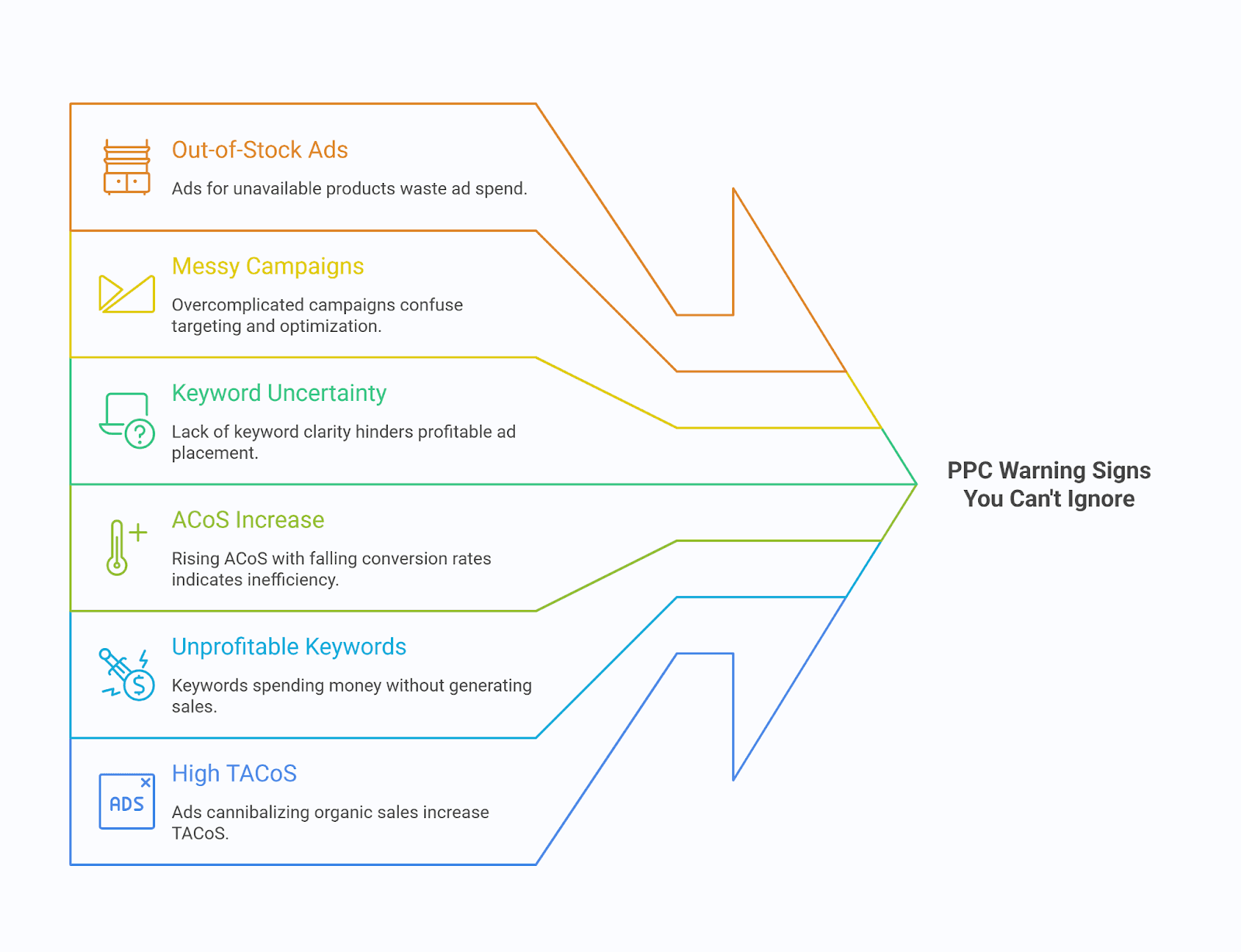
Why is my TACoS high even when ACoS is low?
Your ACoS looks healthy, maybe even impressive, but your TACoS keeps rising up. It feels like the ads are working, yet overall profitability does not reflect that success. The confusion usually comes from not fully understanding ACoS vs TACoS.
ACoS measures how efficient your ads are at generating ad-driven sales.
TACoS looks at how much of your total business revenue is being eaten by ad spend.
So while ads may be efficient on their own, your sales may not be growing alongside them. That mismatch is why TACoS rises even when ACoS stays low, and it is a key signal that your overall growth engine needs closer attention.
Why does this keep happening to so many sellers? Because ACoS and TACoS are telling two very different stories. Here are the reasons that you need to look for:
1. Organic sales are declining
Your ads are performing well (low ACoS), but your organic sales are dropping. When organic sales fall, a larger portion of your total revenue comes from paid advertising, pushing TACoS higher.
Why do your organic sales drop?
Lower product rankings for important keywords
Stronger competition is pushing your listing down in search results
Seasonal demand changes, reducing natural buying interest
Outdated or weak listings that are no longer optimized
Negative reviews or rating drops affecting buyer trust
Loss of badges like Best Seller or other visibility boosts
2. Over-dependency on PPC
If most of your sales come from ads, you are essentially paying for every order. The moment you reduce spend, sales dip. That kind of “rented growth” keeps TACoS high because organic traction never grows.
3. Scaling ads without organic support
You double ad spend, maintain the same ACoS, but organic sales do not grow alongside. Ads start dominating revenue instead of supporting it.
Warning signals sellers often miss:
Ad sales stay steady, but organic sales are not growing
Organic keyword rankings remain flat, even after running ads consistently
TACoS looks the same month after month, despite active PPC campaigns
4. Only targeting bottom-funnel keywords
High-intent keywords convert well and keep ACoS low, but they do not help with brand discovery or repeat organic sales. You win quick conversions, not long-term growth.
5. Low product margins
When margins are thin, even a reasonable ad spend can push TACoS up. ACoS may look fine on paper, but advertising still eats too much into overall revenue.
6. Ads competing against each other
Your ads may be capturing sales that would have happened organically anyway. You end up paying for clicks from customers who were already ready to buy.
5 hidden ways Amazon PPC drains your profits (And how SellerQI helps)
#1 High ACoS campaigns quietly eating your profits
One of the most common ways Amazon PPC drains profit is through high ACoS campaigns that keep running unchecked. These campaigns often look “active” but deliver poor returns.
Why do you end up with high ACoS campaigns?
Bids are too high for the actual conversion rate
Broad or irrelevant keywords attract clicks but not buyers
Missing negative keywords allow wasted spend to continue
Old campaigns are never re-optimized as competition increases
The goal for most sellers is to lower ACoS on Amazon, but without clear visibility, it becomes unclear what's working.
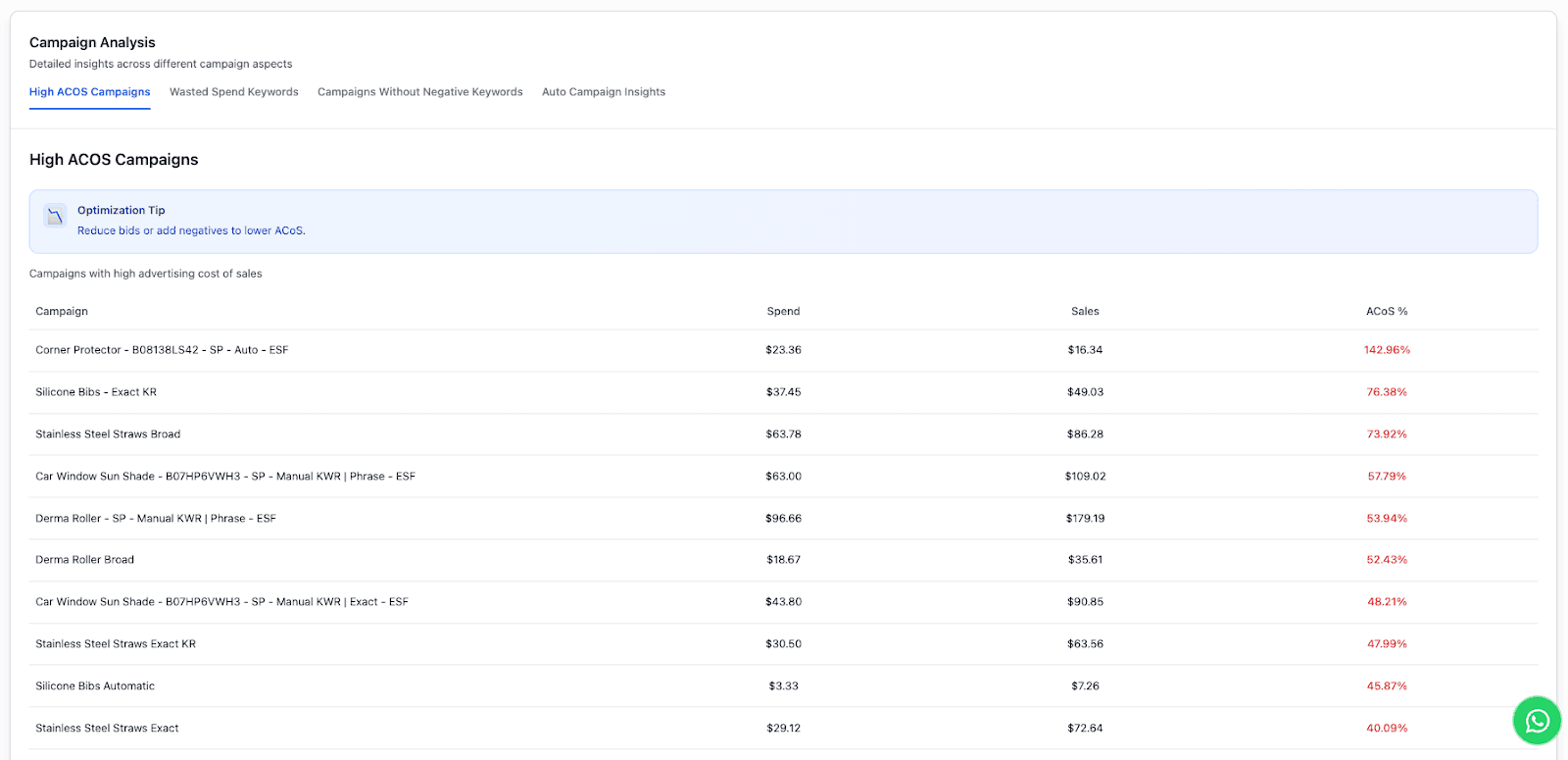
How does SellerQI fix this?
SellerQI highlights exact campaigns with high ACoS, showing spend, sales, and ACoS percentage in one clear view.
You instantly see which campaigns are draining profit, not just underperforming.
The tool provides clear optimization suggestions, such as lowering bids or adding negative keywords.
Instead of guessing, you know exactly where to cut waste and where to optimize.
This turns PPC optimization from trial-and-error into data-backed decisions, helping sellers protect margins and regain control over ad spend.
2. Wasted spend keywords
Another major profit leak in Amazon PPC comes from keywords that keep spending but never convert. These keywords often hide inside active campaigns and quietly burn the budget every day.
Why do sellers end up with wasted spend keywords?
Broad or phrase match keywords pull in low-intent search terms
Search terms get clicks, but do not match buyer intent
Keywords are never reviewed or cleaned up regularly
No clear system to spot keywords with spend but zero sales. Over time, these keywords push ACoS up and reduce overall profitability.
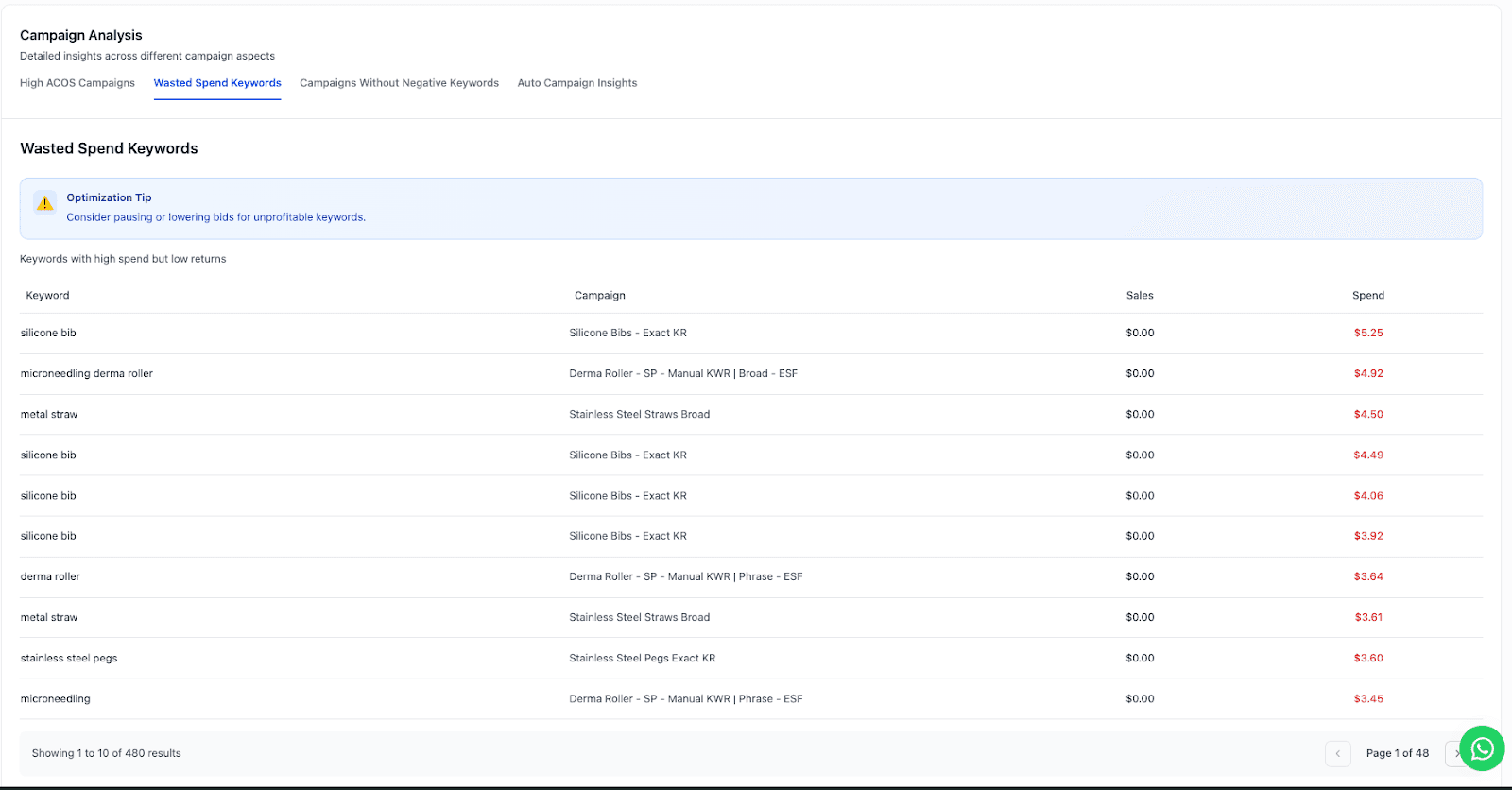
How does SellerQI fix this?
SellerQI lists wasted spend keywords across every campaign, showing spend, sales, and performance clearly.
You can instantly identify keywords costing money without returns.
It provides you with actionable suggestions, such as pausing keywords or lowering bids. This removes guesswork and helps you cut waste fast.
By actively controlling wasted spend keywords, sellers stop bleeding ad budgets and regain control over PPC performance.
3. Campaigns without negative keywords
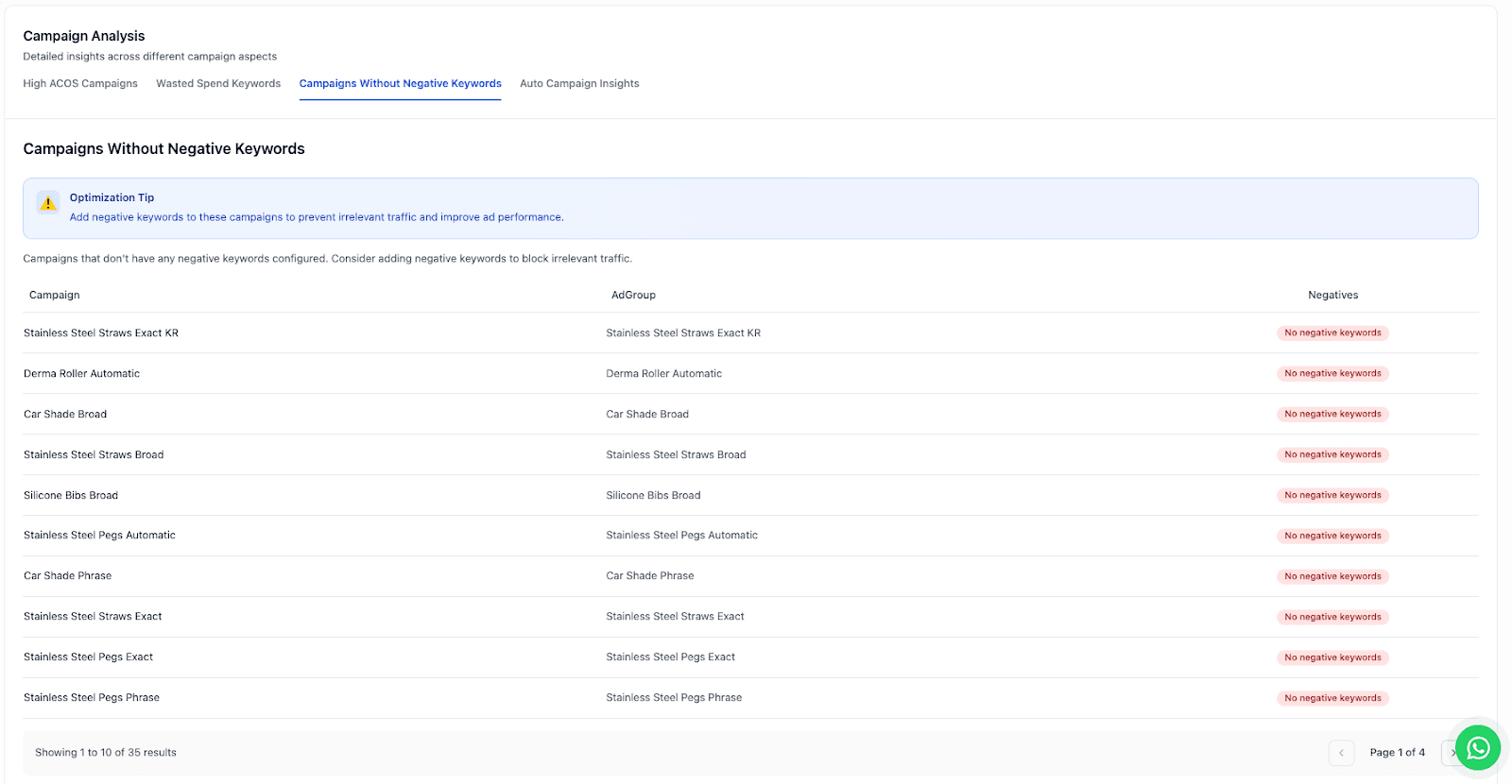
One of the most overlooked reasons sellers keep wasting money on Amazon PPC is running campaigns without any negative keywords. When negatives are missing, Amazon keeps showing your ads for irrelevant searches, and you pay for clicks that never convert.
Why do sellers end up with campaigns without negative keywords?
Auto and broad campaigns are launched but never cleaned up
Search terms are not reviewed regularly
Sellers focus on bids and budgets but ignore traffic quality
Irrelevant searches keep triggering ads without restriction
How does SellerQI fix this?
SellerQI identifies campaigns without negative keywords, clearly showing the campaign type and ad group.
It highlights the exact negative keywords you should add based on wasted search terms.
You get a clear optimization tip, like block irrelevant traffic and improve performance, instead of manual digging, and fixes are quick and data-backed.
By adding the right negatives, sellers stop wasting money on PPC and allow their ads to reach only high-intent shoppers.
4. Auto campaign inefficiencies
Auto campaigns are useful, but when left unchecked, they become one of the fastest ways Amazon PPC drains profit. Many sellers run auto campaigns for too long without reviewing what is actually happening behind the scenes.
Why do sellers face auto campaign inefficiencies?
Auto campaigns keep discovering search terms that do not convert
High-spend search terms are never separated into manual campaigns
Irrelevant traffic continues because negatives are not added
Sellers do not have clear visibility into which auto terms drive sales
How does SellerQI fix this?
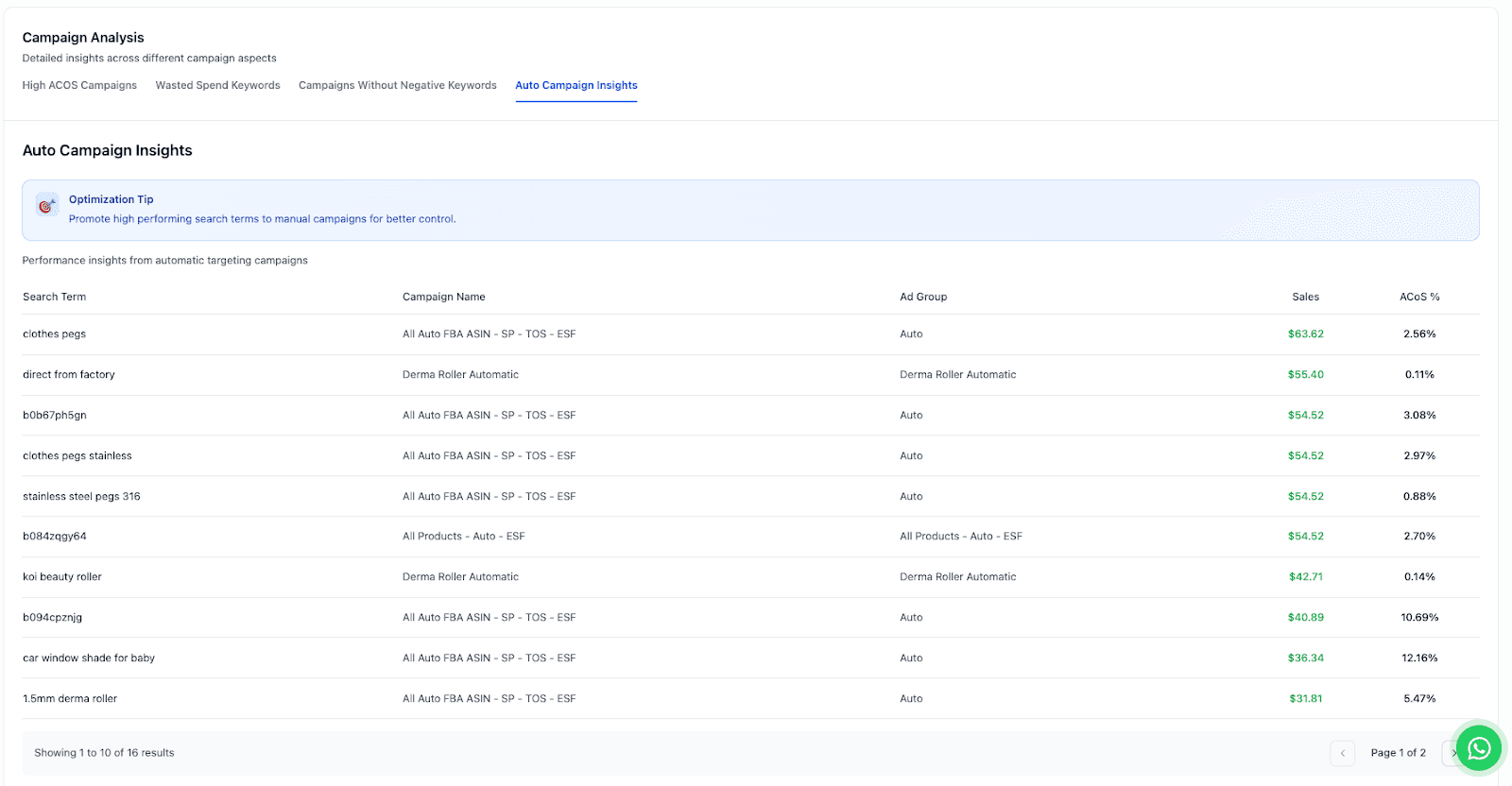
SellerQI provides deep auto campaign insights, showing search terms, campaign name, and ad group in one place.
You can clearly see sales, spend, and ACoS percentage for each auto-driven term. This makes it easy to move winning terms into manual campaigns and block poor performers.
With SellerQI acting as an Amazon PPC software, sellers gain clarity instead of confusion. So that auto campaigns become a discovery tool, not a profit drain.
5. Poor campaign structure and budget allocation
Even with good products and steady traffic, a poor campaign structure can quietly drain Amazon PPC profits. When campaigns are not organized properly, budgets often flow to the wrong places.
Why do sellers struggle with structure and budget allocation?
Too many keywords and match types are mixed in one campaign
Budgets are spread evenly instead of prioritizing profitable campaigns
High-spend, low-return campaigns continue running unchecked
No clear view of which campaigns actually drive business growth
How does SellerQI fix this?
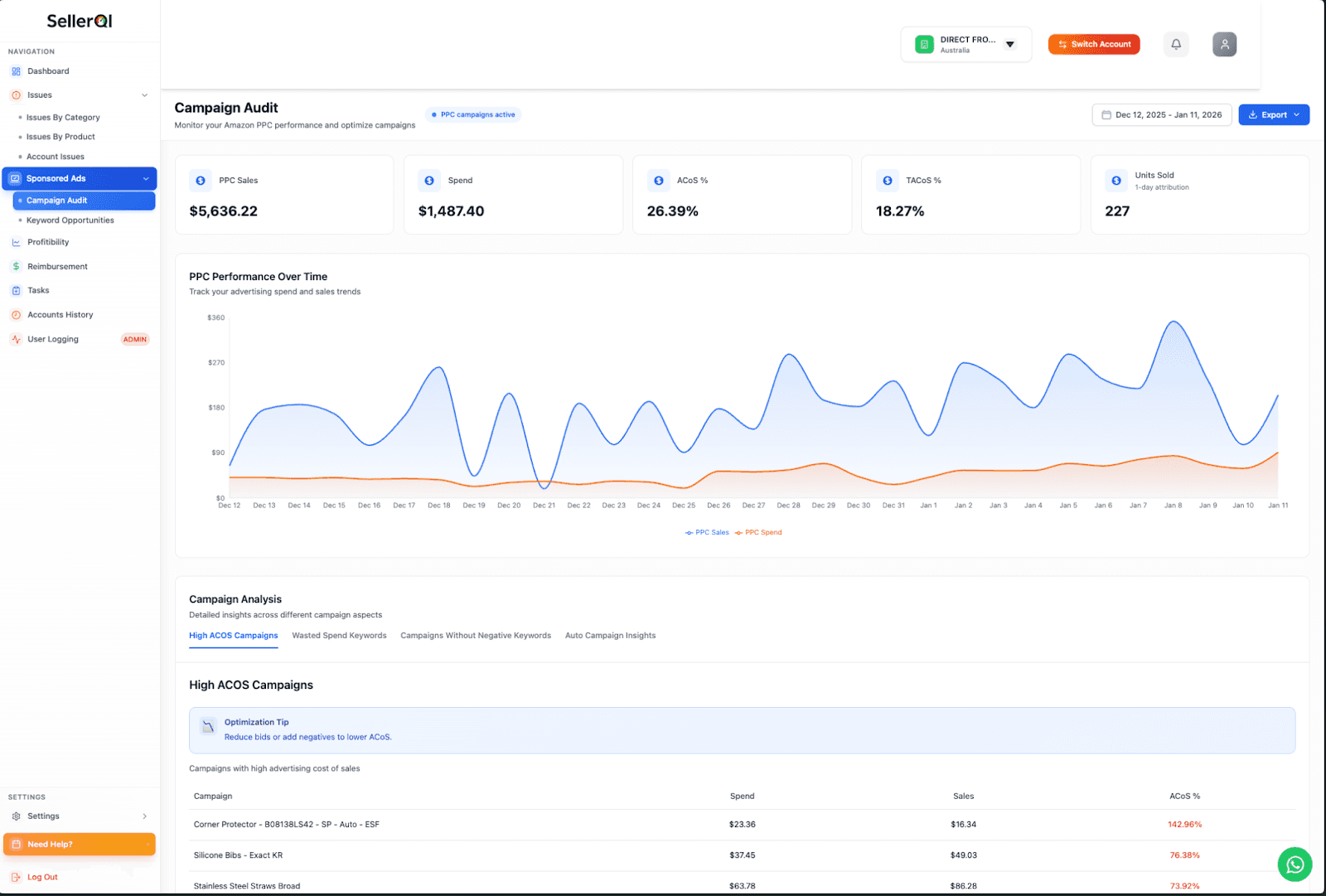
SellerQI provides a complete Amazon PPC audit, showing PPC sales, spend, ACoS, TACoS, and units sold in one dashboard.
You can track PPC performance over time, clearly seeing how spend and sales move together.
This helps sellers reallocate budgets toward profitable campaigns and fix weak structures.
Instead of juggling multiple reports, everything is visible in one place. With a clear audit view, sellers regain control and turn PPC into a predictable growth system.
Final insights
If your Amazon ads look active but profits still feel under pressure, it’s a clear sign that something needs attention. Learning how to audit Amazon PPC helps you spot hidden waste, fix budget leaks, and understand whether your ads are truly driving growth or just replacing organic sales.
With the right insights, PPC becomes a profitable tool, not a guessing game. Start your Amazon PPC Audit with SellerQI today and turn wasted spend into confident, scalable growth.
FAQs
How do I know if my Amazon PPC is wasting money?
If ad spend is increasing, but profits are flat, TACoS is rising, or you see keywords with clicks but no sales, your Amazon PPC is likely wasting money.
What is considered a high ACoS on Amazon?
In 2026, an ACoS above 40% is high. But with rising Amazon fees and extra surcharges, what really matters is your profit per unit. If your ad cost eats into that margin, the ACoS is too high for your business, even if the number looks “normal.”
How often should Amazon PPC be checked?
Amazon PPC should be reviewed at least once a week. High-spend or high-ACoS campaigns should be monitored more frequently to prevent budget leaks.
How do TACoS and ACoS work together in Amazon ads?
ACoS shows how efficient your ads are, while TACoS shows how ads impact your total business. Low ACoS with high TACoS means you are too dependent on paid sales, and organic growth is weak.